
Future signals in this week's news stories
Story 192: Why Barnes is living proof the value of stewardship, not accidental survival

Bridged2050 is a place-based futures project. Its furthest horizon is 2050, following the UK government’s decision to enshrine net zero in law. That choice of date reflects the importance of climate change to this project. You may have read an earlier feature about the great challenges for my generation. Climate change sits at the top of that list.
That is why signs of a changing climate are worth noticing. Reports this week suggest this year is showing signs of what could be the earliest spring on record. According to provisional figures from Nature’s Calendar:
.. the first frog spawn was laid on average on 23 February, well ahead of the previous earliest ever average of 5 March; blackbirds were nesting by 4 March and hazel was flowering on 14 January - eight days before the previous earliest ever average of 22 January in 2024.
Transport - UK Government transport strategy
Bingo! We now have a full set of transport strategies for England, London and Richmond:
UK Government - Better Connected: a strategy for integrated transport (2026)
Mayor of London - Mayor’s Transport Strategy (2018 and 2022 update)
Richmond council - Transport Strategy (2026) or download here
Why it matters
It sounds bureaucratic but it is important these three discrete levels of government make clear their ambition. It makes co-operating easier.
Reassuringly, the the three documents broadly align
The deeper the analysis, the more likely it is that tensions and inconsistencies will surface. Better Connected was only published on Thursday 02 April. Adam Tranter had this quick take
Deep in the Government’s new integrated transport strategy is a truth at odds with the rhetoric: driving a car has gotten cheaper in real terms, and public transport has gotten more expensive.
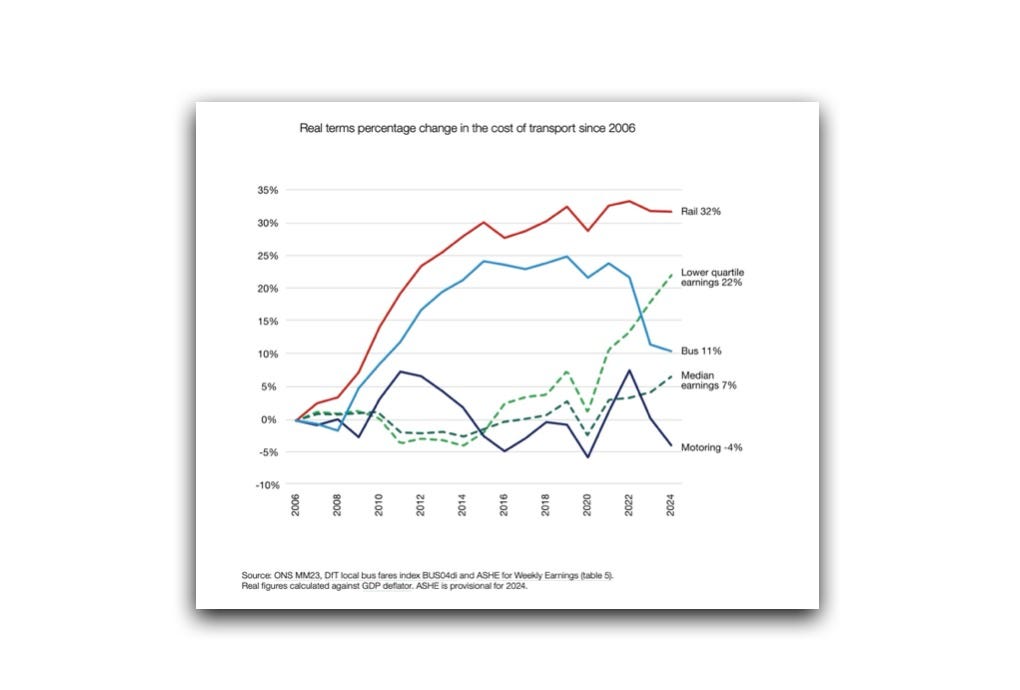
Bridged2050 will be looking at what this latest strategy might mean for Hammersmith Bridge.
Seeing the list above prompted a thought : perhaps Bridged2050 should create a Barnes Transport Strategy?
Transport - Nearly twice as many EV chargers as petrol pumps
An electric fleet of private cars is increasingly likely. The question is how quickly the shift happens.
New figures revealing that the UK now has nearly twice as many public EV chargers as petrol pumps. The Independent reported,
More than 118,000 public charge points are now available nationwide compared with around 60,800 fuel pumps, according to new data released alongside the government-backed Electric Road Trip campaign.
The other striking statistic in the report was less encouraging,
71 per cent of adults surveyed still believe the opposite is true, underlining just how far perception lags behind reality.
What it matters
The electrification of everyday life is gathering momentum. This week it is more charging points for cars; last week it was policy changes making home retrofits easier.
Both shifts must still contend with public misunderstanding and a steady fog of misinformation.
There is a long way to go yet.
Transport - Lessons from Japan
FT Weekend on Saturday 04 April reported on its front page that Japanese police are starting to issue on-the-spot fines of up to £75 to cyclists who break new laws:
Using headphones, riding on the pavement, leaving bikes in parking spots reserved for elderly drivers, holding open parasols while cycling one-handed and carrying “unevenly loaded” bags are among the new offences.
Why it matters
Anti-social behaviour around cycling is more of an issue in the UK too, especially wiht the the increased number of cyclists and the growth of the dockless e-bikes.
Japan’s ageing profile is unusually pronounced, but there is often value in watching what happens in more extreme versions of trends that may spread elsewhere.
In the UK, the challenge may lie less in identifying bad behaviour than in enforcing any new rules. There may be something to learn from Japan here.
Infrastructure - Boat Race Pedestrian pop-up pilot
Bridged2050 believes there’s potential on Boat Race Day to do so much more. This proposal sets out why and how.
Why it matters
The Boat Race is one of the biggest social events in Barnes
At present Barnes adjusts to the influx of visitors, but only slightly.
There is a chance to do more: not least in ways that could help the area financially and socially
Landscape - What is a Throwbag?
I first spotted this sign last week.
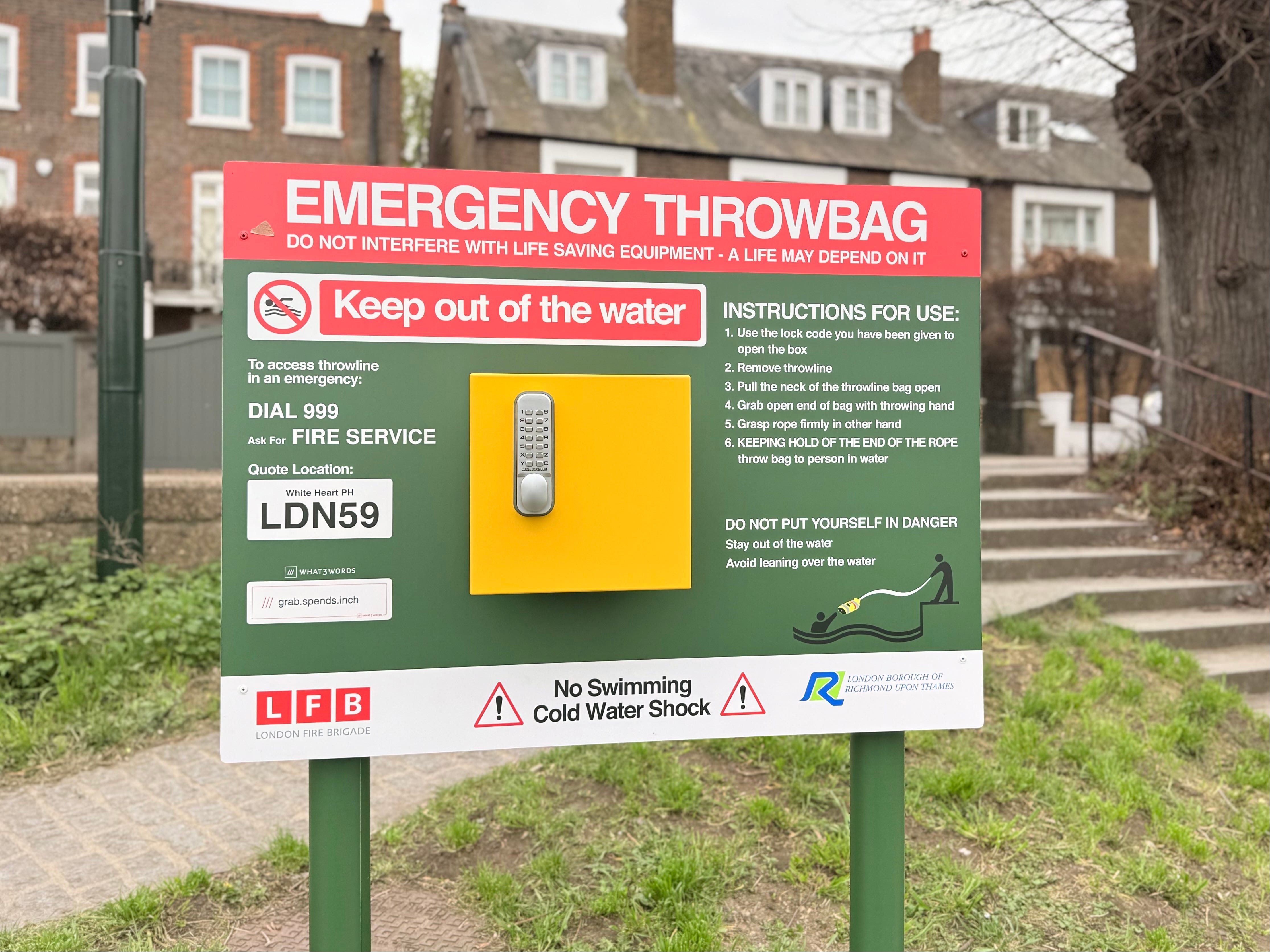
It is one of nine emergency panels installed along the towpath between the White Hart and Barn Elms. As Richmond councilexplains, the panels house emergency throwline equipment that can be used to help someone in trouble in the water.
Why it matters
The council has developed a draft Towpath Strategy. Details of the discussion, along with links to the webcast are here. The strategy reflects the importance of the borough’s 17km of riverbank.
Bridged2050 welcomes the investment in the towpaths. Only when they are consistently excellent, can the bigger ambition be met. Bridged2050 believes we should live on the river not just look at the River Thames.
Lifestyle - Changing nature of families across London
The map caught my eye.

The report from Centre for London was called, Hollowing out London? Families and neighbourhood change in the capital.
Several aspects of Richmond borough stand out in the report:
Healthier environments — High streets in affluent areas like Richmond tend to have a more health-promoting retail mix, including cafés, gyms and social clubs, which can support healthier lifestyles and social connection.
Residential stability — With lower rates of temporary accommodation and out-of-area placements, the borough avoids some of the disruption seen elsewhere. Families in insecure housing often face repeated moves that break links to schools and support networks.
Reduced budgetary strain — Unlike boroughs with high homelessness rates, Richmond faces less pressure from the soaring cost of temporary accommodation.
Why it matters
There is another side to this story. The report also points to some harder truths:
Polarisation and inequality — It suggests that the concentration of affluent, high-status professionals in places like Richmond risks deepening a more polarised city, with life chances increasingly shaped by postcode.
Barriers to entry — Richmond has one of the lowest proportions of social housing in London. That is another sign of how inaccessible affluent areas are becoming for lower-income families.
Wider demographic decline — Even though Richmond saw growth in its share of families, its fertility rate remains below the replacement rate of 2.1 children per woman needed to maintain a population without migration. Across London, falling birth rates are already putting long-term pressure on school budgets and maternity services.
Barnes is a relatively affluent corner of Richmond borough. The report sharpens an uncomfortable worry: that Barnes risks becoming one of London’s larger gated communities in all but name. That would remain true even if Hammersmith Bridge reopened to cars. The real gatekeepers are the sheer number of million-pound homes.
Lifestyle - History of Barnes Bowling Club
Smaller community listings seldom feature here. This is, after all, a journal about the future. But occasionally an upcoming event triggers a reaction.
One example is the ‘History of Barnes Bowling Club’, a FiSH talk on Tuesday 07 April. The speaker is talking about the 300-year evolution of Barnes’ green spaces.
Why it matters
It reminded me of a conversation with a fellow resident at the BCA Tuesday Local, which I wrote about here. We were discussing time. I explained my interest in imagining Barnes in 2050 and she replied that she found that difficult, ‘Such a long time ahead.’ The remark stayed with me. So muhc so, I have been thinking about a series on how we imagine time.
Meanwhile, we live in a village that is more than 1,000 years old. And as the FiSH website puts it:
Understanding the historical landscape of Barnes helps frame modern arguments for its preservation.
It’s a reminder that our current ‘green’ assets are the result of centuries of stewardship, not just accidental survival.
Stewardship, not accidental survival. A perfect summary of Bridged2050’s ambition for navigating the next twenty-five years.
There’ll be no new stories published in the coming week. If you’ve been following this journal, you’ll know I take time out on a regular basis to reflect on progress and adjust my plans accordingly. March 2026 marked the end of the first full year of publishing here. There’s a lot to think about. The next update will be on those reflections.
How Paris halved its traffic in 20 years
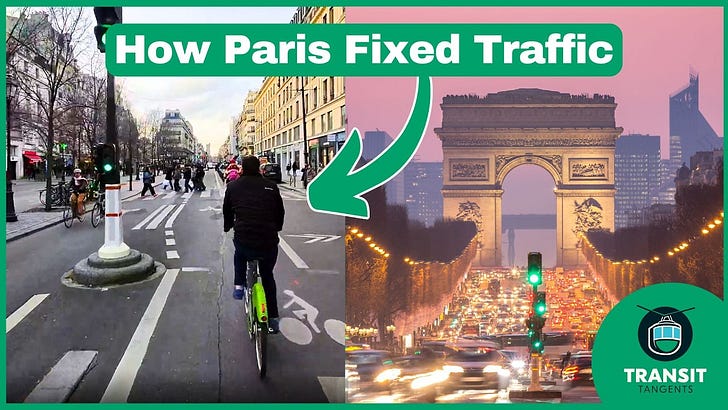
I saw it last year: a city center transformed. Despite the temporary demands of the Olympics, Mayor Hidalgo’s ‘pro-bike’ vision has stuck.