
Lessons from Rotterdam, Netherlands
Story 176: Less a rebuilt city, more an on-going experiment

Welcome to Bridged2050: ideas for living well in a climate-ready Barnes
I have a weakness for second-tier cities.
Hamburg. Belfast. Liverpool and now Rotterdam.
They tend to be confident, glorying in their identity and magnificent hosts.
This time, the draw was architecture. Rotterdam’s historic centre was flattened by German bombers in May 1940, a moment that still shapes the city’s identity.
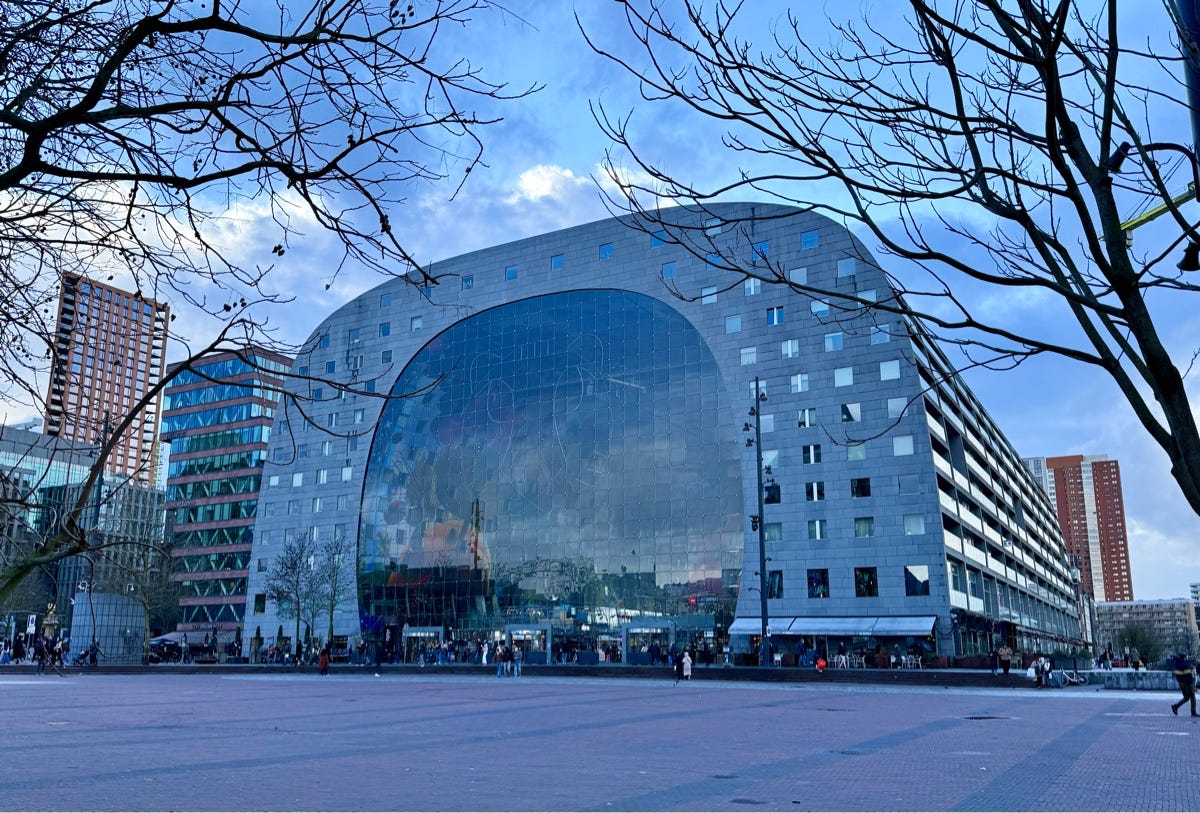
At the war’s end the city was quick to begin a massive rebuilding program and did so in a visionary way, determining to build a modern city that looked to the future rather than one that emulated the city of the past.
This building boom has continued for decades.
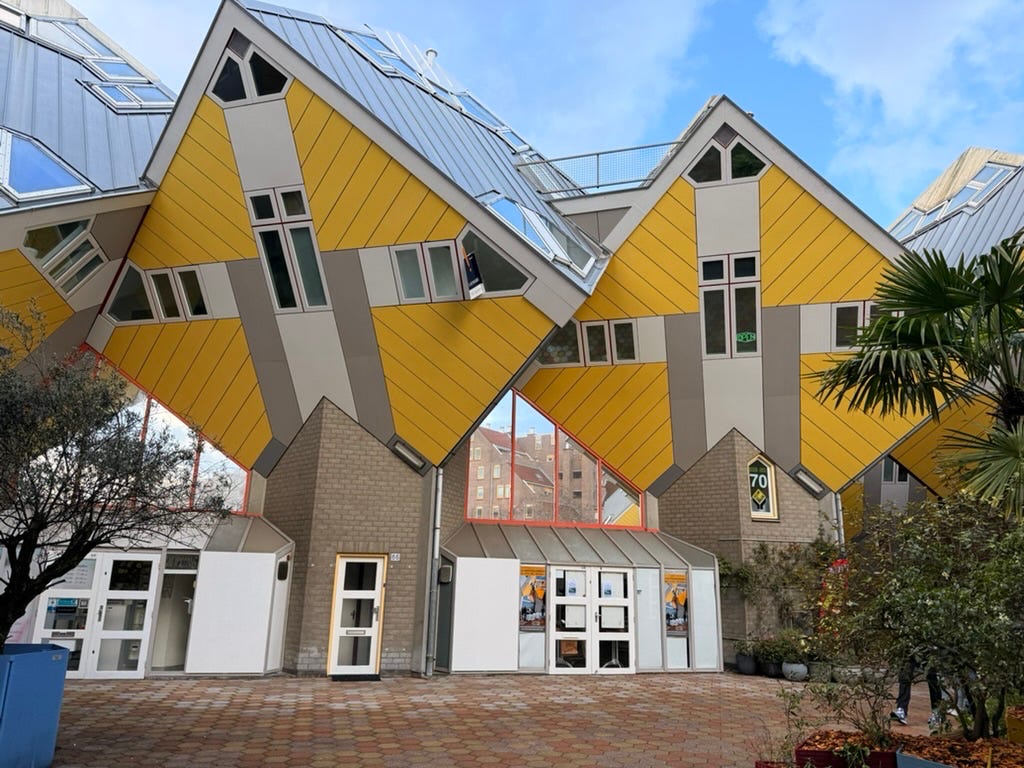
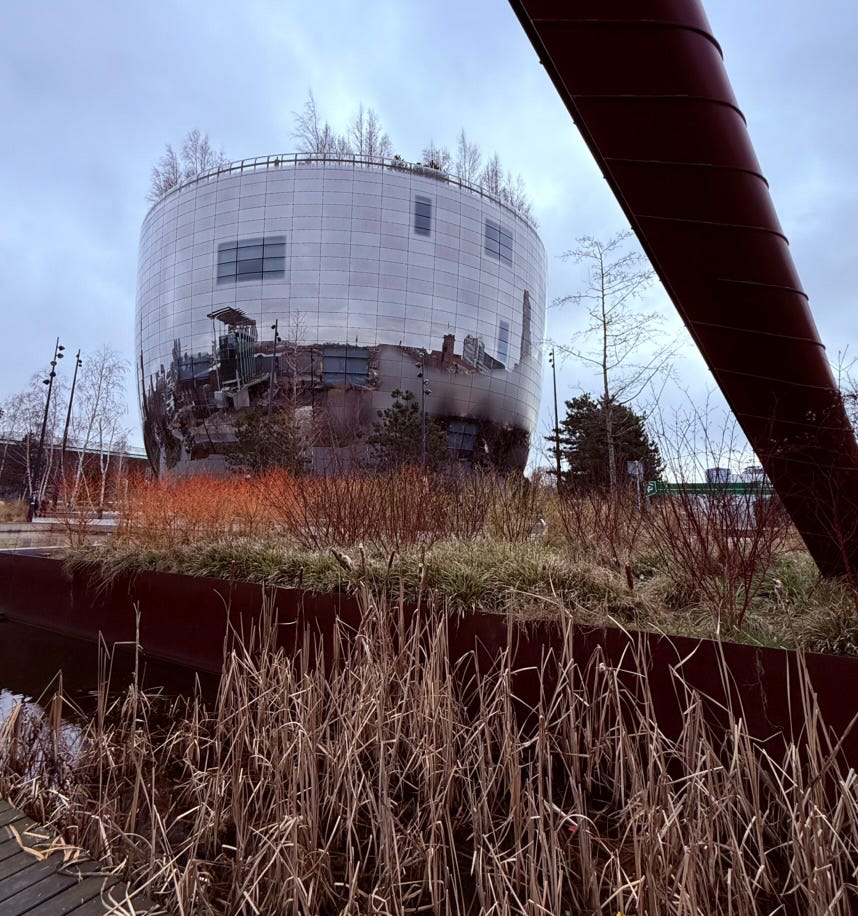
Now the city is a vast, open-air museum of modern and contemporary architecture.
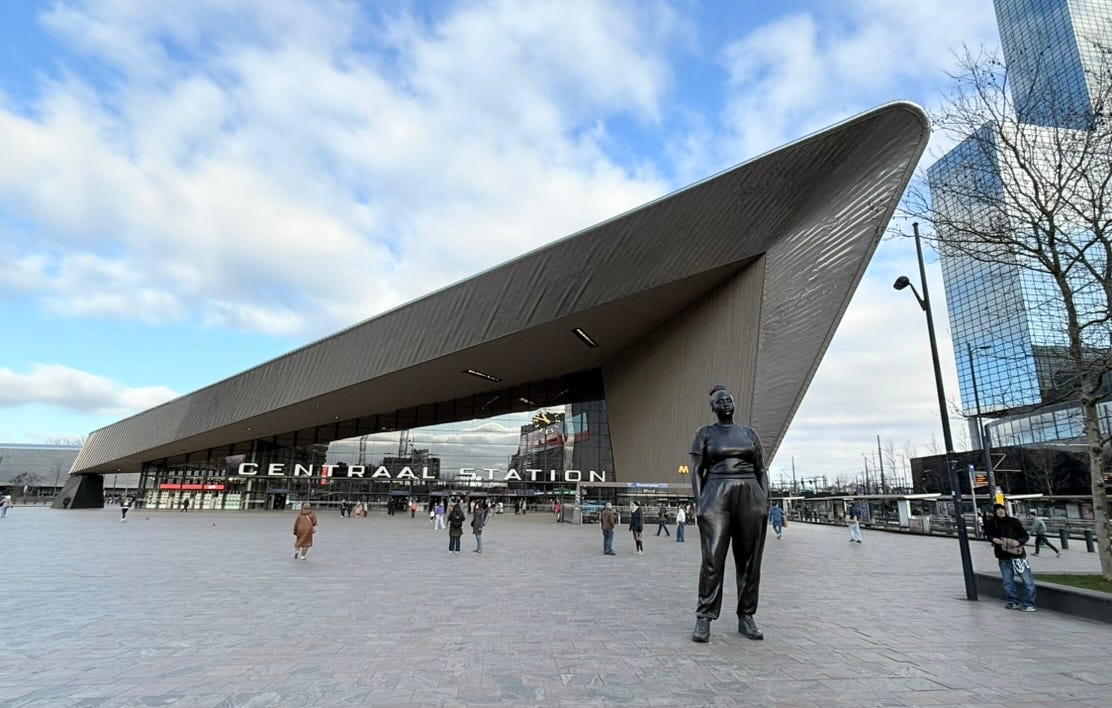
There are eye-popping buildings. Not all of them attractive.
That, oddly, is part of the charm.
The food was excellent. A reminder that cities, like cuisines, are shaped by history, migration and exchange. Different countries, different colonies, different cuisines. Surinam, Indonesia and Eritrea. And different cultures.
A short train ride away sits Delft, offering a seventeenth-century counterpoint: canals, brick, symmetry, continuity.
Notes and thoughts
In truth I barely left Rotterdam’s centre. There was so much to see and do.
I walked everywhere despite the prevalence of public transport and e-bikes.
The rebuild started in the late 1940s and has continued apace since. In the first three decades it was shaped by the car. Wide roads. Generous junctions. Space allocated with a modernist confidence.
Even now the cars feel more dominant in Rotterdam compared to other Dutch cities I have visited. Pedestrians often (and happily) wait patiently at crossings that feel glacial by London standards.
And yet.
This is still the Netherlands. Bikes had a presence before World War II. Rotterdam’s tram service began with horse-drawn trams in 1879 and has been upgraded and expanded through the decades.
This blend means, to the visitor at least, Rotterdam felt more like London than expected.
The Rotterdam zeal to build brave and repeatedly reflected a broader change in Dutch design philosophy which had shifted towards being more people-centred. The city’s architecture and design museum had an exhibition explaining this cultural change which affected all aspects of life.
Rotterdam felt Dutch contemporary - there’s a high proportion of cycling by international standards - but with a undercurrent of London.
I was reflecting on what to take from this visit and came across this video by Dutch commentator. Despite the screenshot, this is about far more than bicycles.
Rotterdam has gone through more change than most Dutch cities - that’s Amsterdam and Utrecht coughing in the corner. Much of the Dutch experience feels strikingly recognisable:
As cities grow, there is simply not enough physical room for everyone to rely on private cars. Transformation begins with the realisation that space must be redistributed because ‘there is not enough room for everything’
Efforts to remove cars often face strong pushback from across the political spectrum and from local shopkeepers who fear a loss in turnover. However, experience shows these concerns often fade as the benefits of the changes become visible.
Contrary to fears of retail decline, car-free areas tend to attract more visitors who stay longer and spend more time at cafes and shops. Retailers often benefit from increased footfall and ‘longer stays’ in these quieter, greener environments.
Removing thousands of parking spaces allows cities to create wider pavements, play areas, and green spaces.
Replacing tarmac with trees and planting provides essential cooling (cities can be 5°C warmer than surrounding areas) and improves drainage during heavy rain.
Reducing car volume and speeds is a direct strategy for reducing serious injuries to cyclists and pedestrians in urban traffic.
That third point about retail is worth calling out.
Barnes is not a city, but an urban village within one. Bridged is not proposing sweeping car-free districts by 2050. The argument is subtler: fewer cars overall, and selective car-free moments — certain streets, certain hours — becoming more normal. More on this later in the year. The expectation is - in line with experience to date in Barnes and the Dutch feedback - this should strengthen our four retail parades not diminish them.
One final observation.
After walking for hours — 25,000 steps on several days — I realised my fascination was not with the buildings themselves, impressive as many are.
It was with what happens between them.
The streets.
The pavements.
The spaces where urban life actually unfolds.
In Rotterdam, these did not feel like corridors.
They felt like places to connect with others. To belong.
