
Another London bridge closed to traffic
Story 172: And why this might matter for Hammersmith Bridge

Welcome to Bridged2050: creating an even better Barnes during this climate crisis
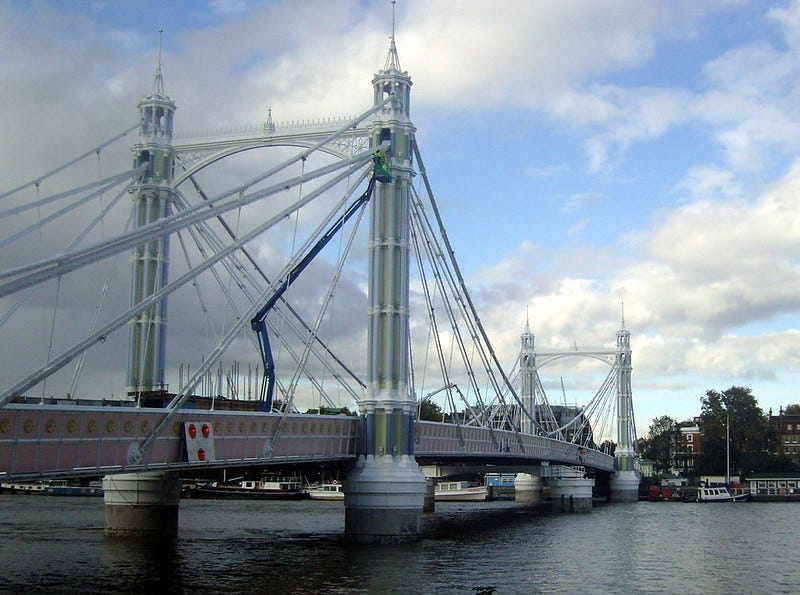
Albert Bridge, which links Battersea and Chelsea, was closed to traffic on Monday, 09 February.
Kensington and Chelsea council described the move as precautionary following recent inspections,
We’re doing this as a safety precaution after our maintenance works.
Our engineers need a bit of time to look over the results and figure out the next steps.
Pedestrians can still cross and traffic diversions are in place via Chelsea Bridge and Battersea Bridge.
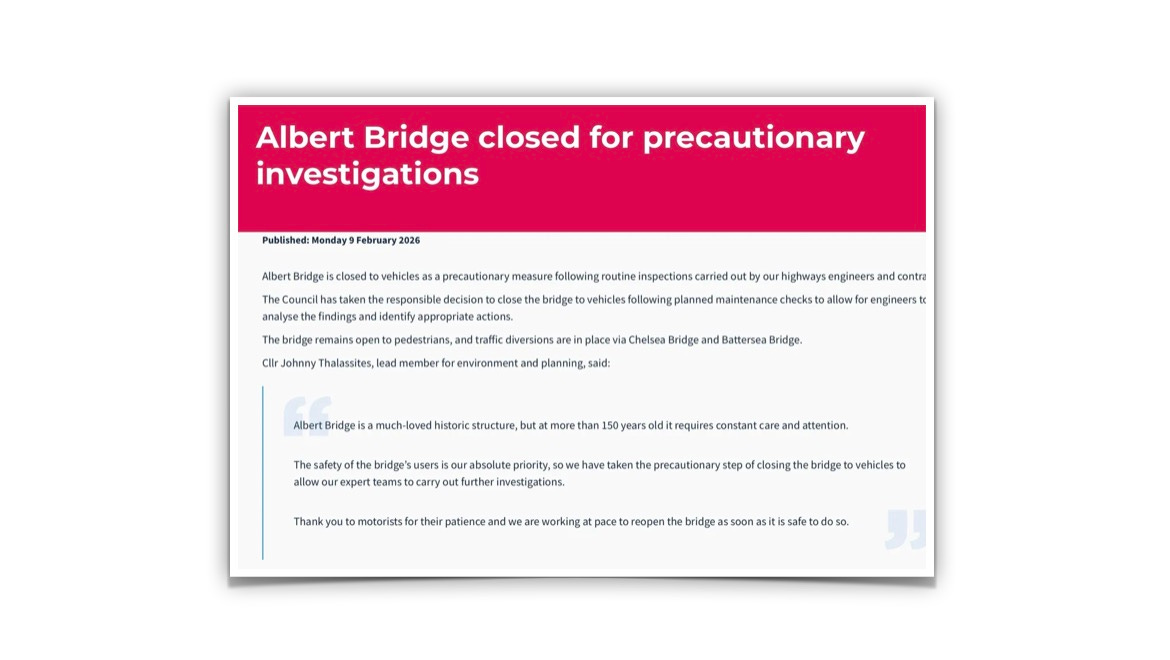
Albert Bridge, which first opened in 1873, is more than 150 years old and is an English Heritage Grade II* listed structure.
The council said, a three tonne weight restriction has been enforced since January 2024 to protect the bridge.
Notes & thoughts
This could be good news for those who want to restore cars to Hammersmith Bridge.
Bridged resists political speculation, preferring to judge leaders on their words and actions. But such is the significance of Hammersmith Bridge to the future of Barnes and the unlikely event of two London bridges being closed to traffic, there is value in considering what might happen next down river.
Kensington and Chelsea council need to assess the scale of the risks and, if required, the cost of avoiding them. There is no timeline for this, currently.
Bridge repairs are usually neither cheap nor quick. Over £50m has been spent on Hammersmith Bridge so far to stabilise the engineering sufficient to allow pedestrians and cyclists to cross. Even if the restoring Albert Bridge costs only £50million - and Hammersmith Bridge will cost five times as much, at least - Kensington and Chelsea council will not be able to fund this. It is facing significant cuts in funding from the UK central government and has warned residents of austerity measures.
That is where national politics could enter the picture.
It is possible only the UK government has the financial clout to restore Albert Bridge.
Infrastructure decisions, while technical in origin, rarely stay technical for long. Seen from the perspective of the central government, it might be politically unacceptable to have two of London’s bridges closed to traffic. This second closure might increase the likelihood of a UK government intervention on these Thames’ crossings.
Does it change the underlying economics of Hammersmith Bridge? Not necessarily.
What it does change is the context.
There are other options.
The Secretary of State, Mayor of London, Transport for London and other interested bodies could back a strategy which sees these two bridges dedicated to pedestrians and cyclists. No?
Or the business case for restoring Albert Bridge is stronger than the one for Hammersmith Bridge, so funding is only provided for the Chelsea.
More soon. Or more accurately judging by the experience of Hammersmith Bridge, Maybe more soon.
