
Wet concrete: School Street trial must be starting
Story 177: First pilot of its kind in Barnes

Welcome to Bridged2050: ideas for living well in a climate-ready Barnes
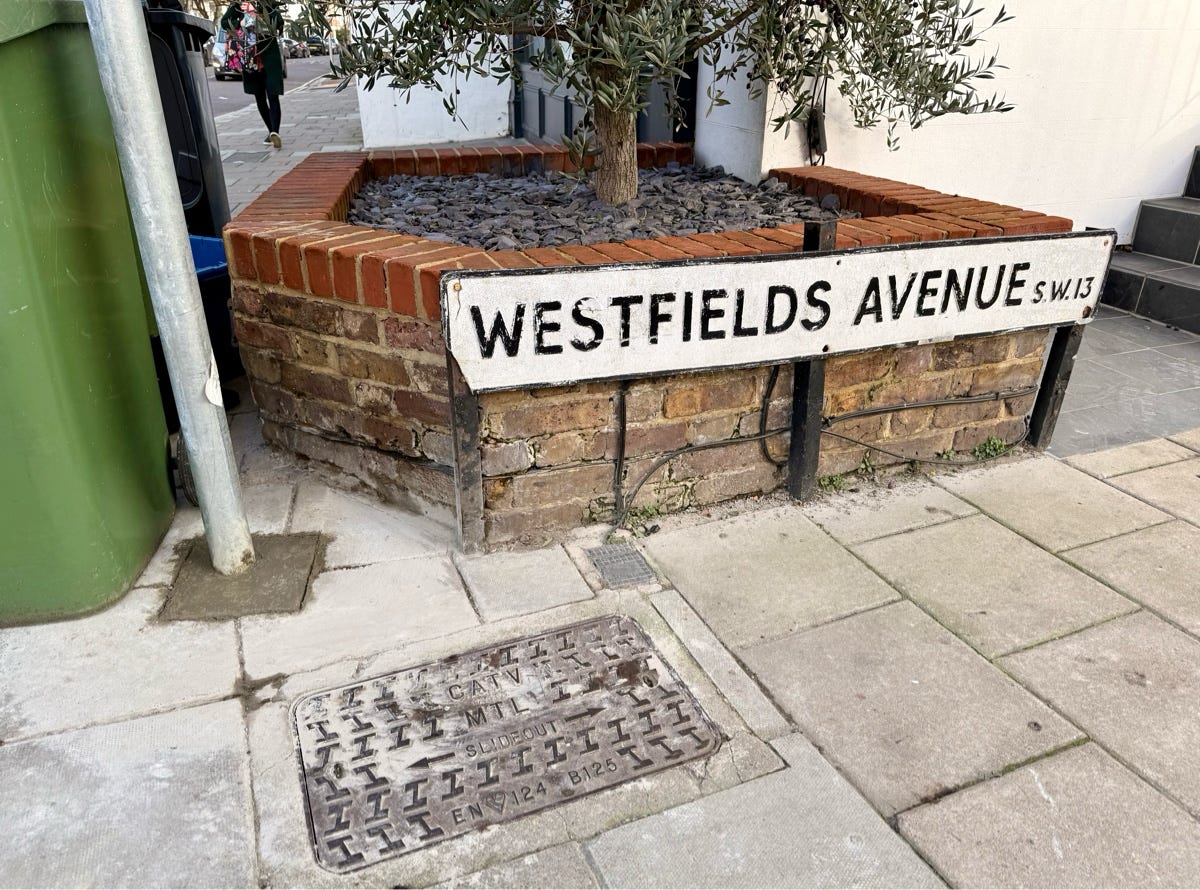
You could tell before reading the signs.
Fresh concrete had been poured around a new post.
The Barnes Primary School Street trial started on Monday morning, 23 February
Earlier this month, Richmond Council’s Transport and Air Quality Committee received its latest update on the programme, describing these schemes:
.. part-time pedestrian and cycle zone near a school [is intended] to enhance the safety of school children, support active travel to and from schools and to reduce local exposure to air pollution
Barnes Primary School were initially interested in being in the first phase of trials - there have been 19 launched across the borough so far. But it decided not to proceed because of how they understood the scheme would be managed. Having seen first hand how some of the other trials have worked, they decided to join the fifth phase.
The practical implications were set out in a letter to local residents.
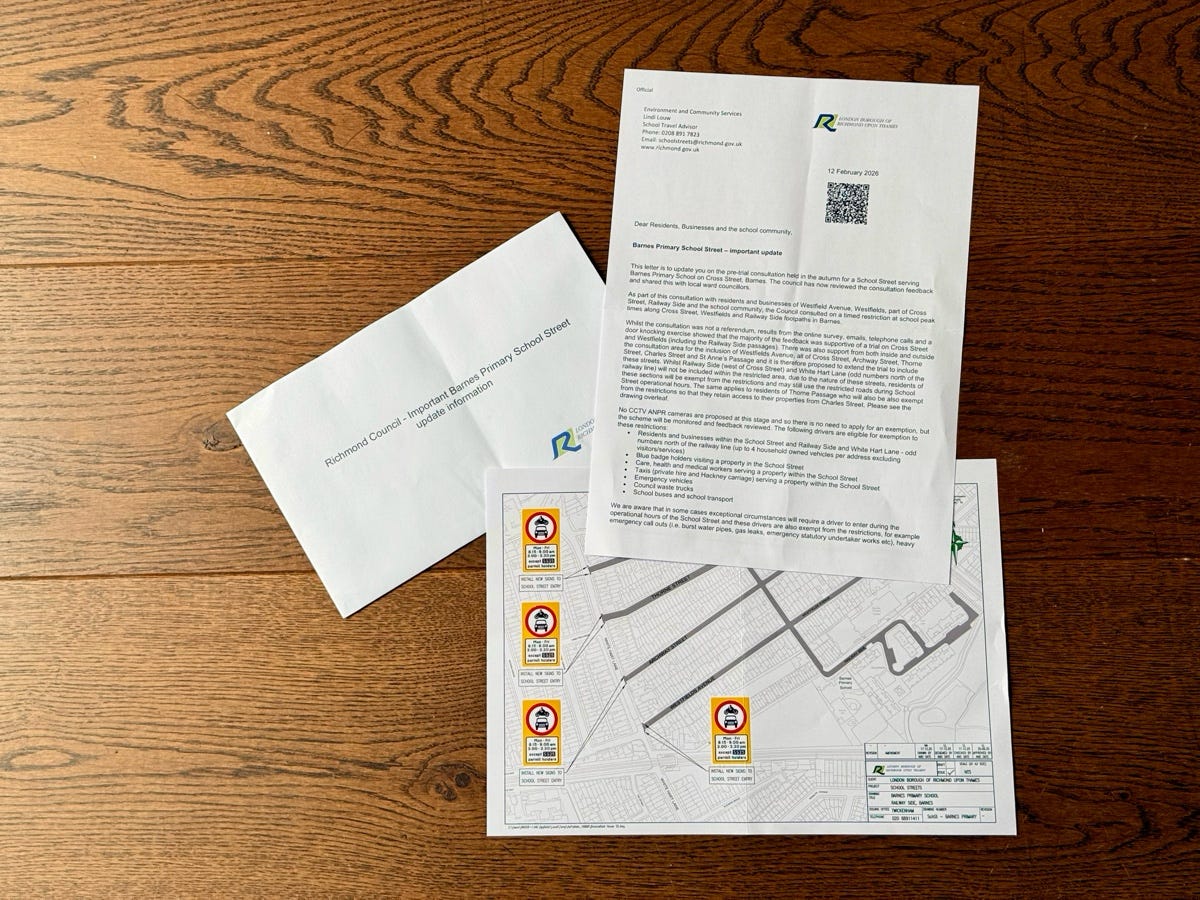
Trial details
The six month trial started on Monday 23 February, after the half term break. The traffic restrictions cover a much wider area than just the two streets nearest the school.
The trail is in place Monday to Friday from 08:15 to 09:00 and 15:00 to 15:30.
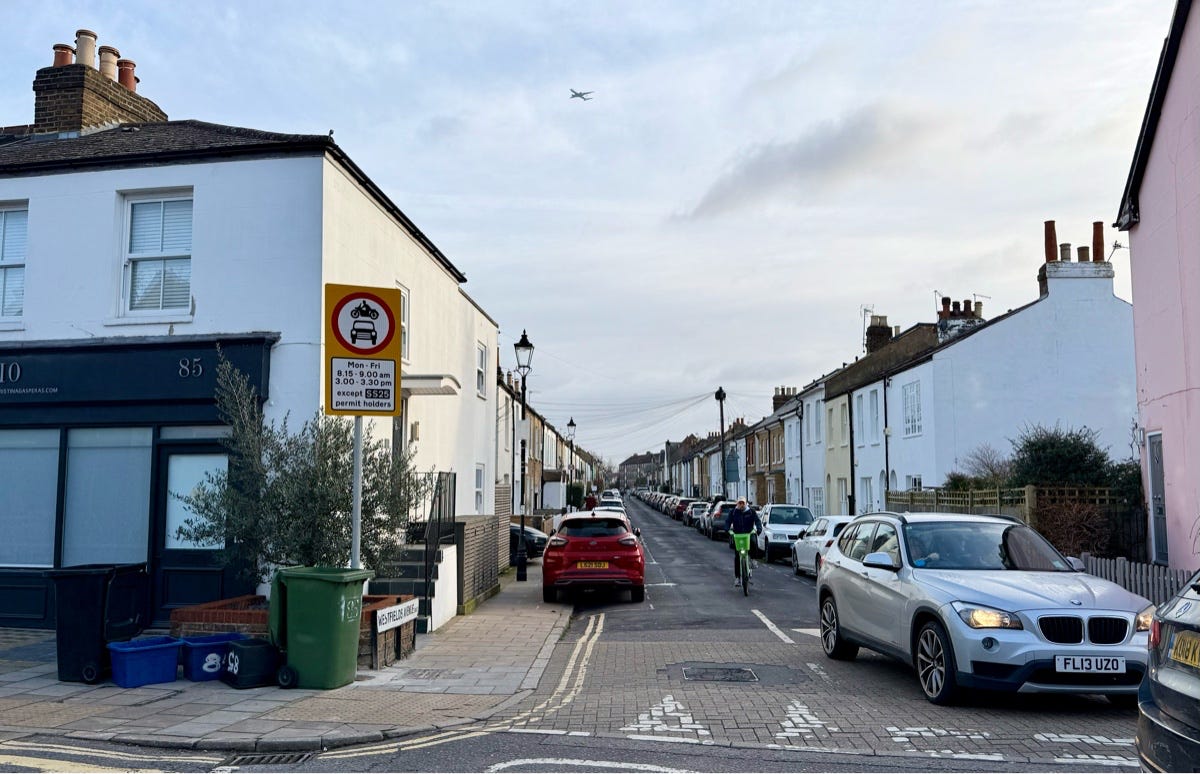
New road signs are now in place.
Unlike some other trials, this one is not using Automatic Number Plate Recognition (ANPR) CCTV cameras, so there is no need to apply for an exemption pass.
Richmond council are inviting feedback online during the trial.
Notes and thoughts
This was the first morning of the first day of a six-month trial. It is far too early for verdicts.
Bridged will return to these School Streets several times in the coming months. What happens at the edges of the zone? Does traffic shift elsewhere, and if so by how much? What happens in the afternoon at pick-up time?
A few early observations stood out.
A small number of cars arrived between 08:10 and 08:15. Were they trying to squeeze in a drop-off before the restriction started? Possibly.
Between 08:30 and 09:15, several commercial delivery vans came through. Some were national operators, including IKEA; others appeared local. As the council has made clear, these vehicles are not exempt from the restrictions.
There were also at least four cars pulling up near the school during the restricted period, when non-residents are not supposed to enter. They may have been parents living within the School Streets area, dropping off children before driving out of Barnes. That is possible. From a distance, it is not always easy to know.
And that points to one of the tensions in this version of the scheme.
As currently designed, the trial relies heavily on trust: on parents and guardians respecting the rules, and on drivers spotting the new signs in time. Some people will comply willingly. Some will not. The signs, meanwhile, are harder to see from certain approaches than they should be.
That raises an obvious practical question: at what level of non-compliance would the council consider introducing ANPR enforcement?
A bigger point than one school run
Temporary traffic measures are likely to become more important, not less, in the years ahead. They are one of the main ways councils can test a different allocation of road space before deciding whether to make changes permanent.
Sometimes that redistribution is physical and lasting such as a bike lane, for example, or the conversion of a parking space into a bikehangar. Sometimes it is managed by time: the same street, used differently at different hours.
That kind of time-based management is not new in principle. Barnes has seen roads closed temporarily for street parties, including royal weddings and anniversaries. But using timed restrictions to reshape everyday movement — especially around schools — is a different order of change. It touches daily habit.
And daily habit is where transport policy becomes contentious.
Some temporary closures have proved unpopular. The possibility of closing Barnes High Street on the day of the Barnes Fair, for example, met strong opposition from residents unhappy about buses being re-routed past their homes.
That is one reason this trial matters beyond Barnes Primary.
If this is the first School Street in Barnes, it is also another step in making this kind of active space management feel normal for something other than roadworks. Bridged’s view is that there will be more of it in future: more timed access, more reallocation, more experimentation, and more arguments about who public space is for.
If that future is coming, two things follow. The council will need to be better and better at communication, design and enforcement. Residents will need to be willing to judge schemes on results, not just instinct.
Much more to come on this one.