
E-bike revolution continues to roil
Story 188: Richmond council opts for Forest not Lime bikes

Welcome to Bridged2050, a place-based futures project exploring how Barnes might thrive in a climate-ready future
The green bikes and their chirpy jingles look set to disappear from the steets of Barnes, at least for the next three years.
Forest has been selected as the preferred sole e-bike operator for Richmond Council, subject to final contract negotiations.

At its March meeting, the council’s Transport and Air Quality Committee chose Forest over Lime.. The council says the new contract offers
Better service to users
Reduction in anti-social parking
VFM for council tax payers
‘This is not a vote against e-bikes. It is a vote for a better-managed next phase.’
You can watch the debate here.
You can read the formal proposal here. There was a second paper, exempt from the public because it contained commercially sensitive information.
Recognising the significance of the decision, the Councillor Alexander Ehmann took to social media to explain the decision.

Richmond is not alone in taking a firmer line with dockless bike operators.
As MyLondon reported, several London boroughs have recently pushed for tighter control over how these schemes are run.
Hounslow Council ended its partnership with Lime after selecting Forest and Voi as its preferred providers.
Brent Council pressed Lime hard on poor parking and abandoned bikes, before agreeing improved arrangements.
Islington Council has also warned operators about the management of badly parked bikes.
The mood has shifted. Boroughs still want shared e-bikes. What they no longer want is disorder packaged as innovation.
What changes in Richmond
Lime has been the borough’s sole provider since Richmond council entered into a contract with the company in 2021. Last year there were more than 1.5 million e-bike trips in the borough, up by around 50 per cent on the year before.
Under the proposed new arrangement, the contractual fleet size would rise from 500 to 1,500 bikes. The real number visible on the streets may at times be higher or lower, depending on how many bikes are ridden into or out of the borough from neighbouring areas.
The number of parking bays is also due to increase sharply, from 65 to at least 150, in an attempt to reduce the number of bikes left blocking pavements.
The accompanying map of service areas also weakened one of the objections raised during the debate: that Forest would struggle to provide continuity into neighbouring boroughs. On paper, at least, the cross-border picture looked more credible than critics suggested.
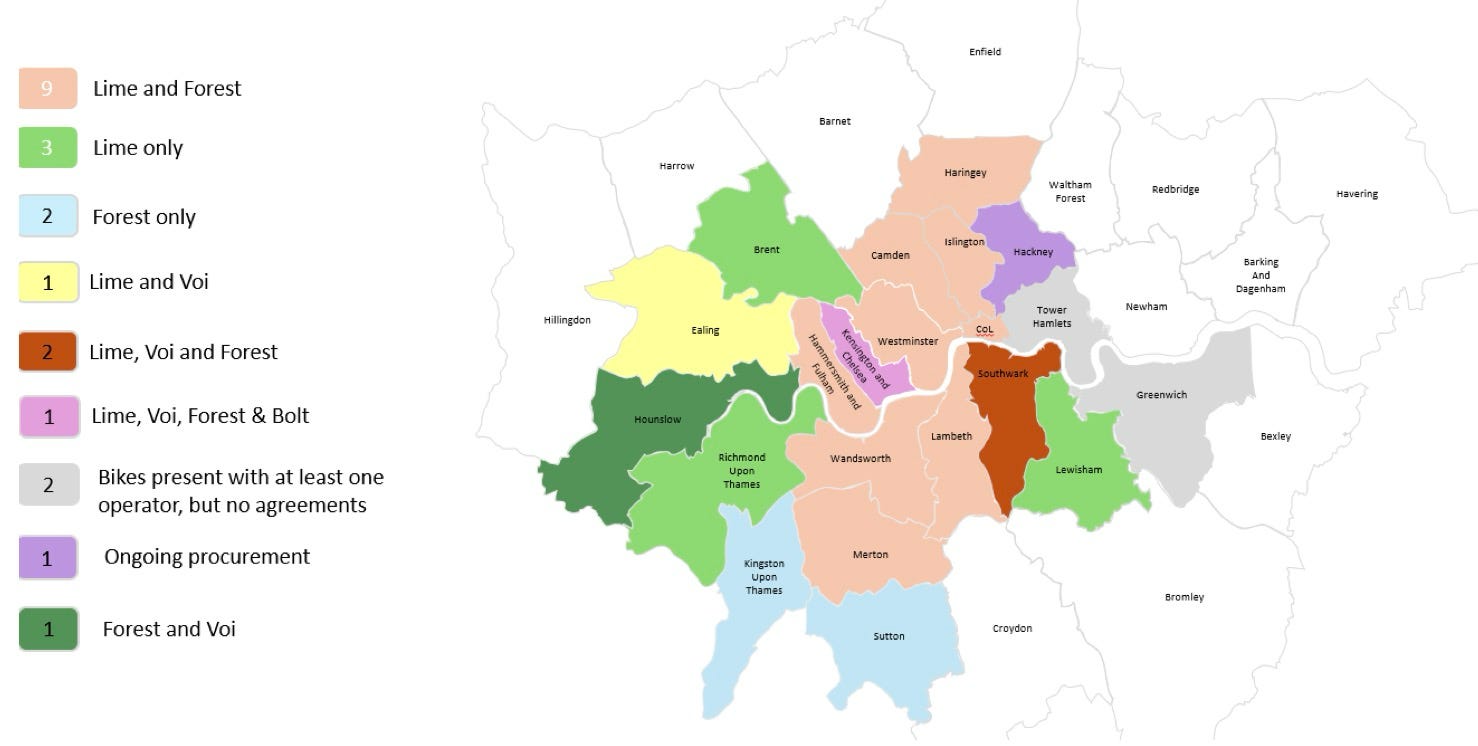
Another point emerged clearly from the committee papers: the two bidders were close on quality. Price, therefore, mattered.
Public feedback also pointed in one direction. Residents wanted better day-to-day management, especially on anti-social parking.
Forest is a British company. Council officers were careful to say that this had no bearing on the decision. Even so, it is a detail some residents will notice.
If the contract is agreed, Lime will cease to operate formally in the borough. Given how many journeys start or finish locally, that would amount to a significant change in what Barnes riders actually see and use.
All of that, for now, remains subject to negotiation.
Lime pushes back
Lime was never going to take this quietly and said,
Almost all London boroughs are moving toward systems with at least two operators, giving residents a choice of shared e-bike services. That makes this decision to limit choice all the more disappointing, and hundreds of Richmond Lime riders have already written to us expressing their concern.
Ross Lydall reported on the backlash in the Evening Standard.
Meanwhile, Lime keeps pedalling
Whatever happens in Richmond, Lime remains the dominant shared e-bike brand in London and is continuing to invest.
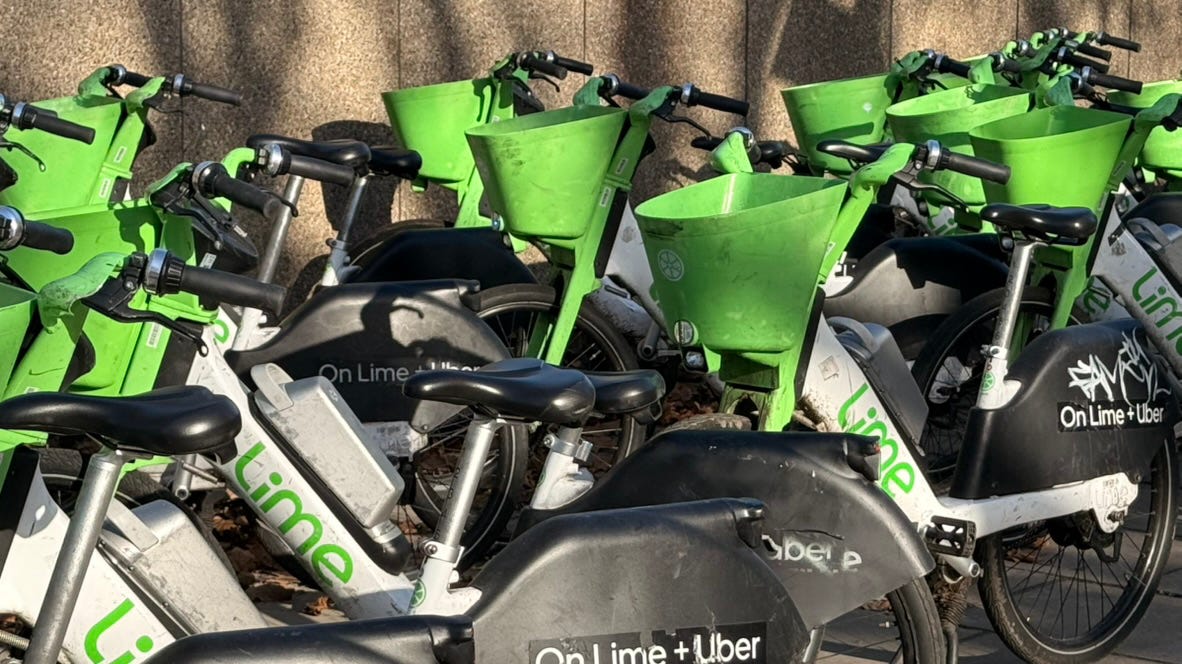
This week it announced that around 1,500 new, smaller hire bikes will be introduced across the capital. Early reactions from reviewers suggest the redesign is more than cosmetic.
Noora Mykkanen, Metro: “I noticed that they’ve fixed the sudden jolt that cyclists feel when you set off, making it smoother and easier to manoeuvre.”
Ross Lydall of The Standard interviewed the Lime team: “The new bike has smaller (and wider) 20in wheels, a lower frame – making it easier for smaller riders to “step through” – and is much easier to handle, due to the battery being relocated to behind the seat post.”
Lime has also announced a new subscription model, LimePrime. The £6.99 monthly plan offers a flat rate of £1.70 for rides of up to 20 minutes, plus 30-minute vehicle reservations.
Notes & thoughts
Bridged2050’s first instinct was much like everyone else’s: swapping out Lime seemed odd.
But having read the papers and watched the debate, the decision makes more sense than it first appeared.
This is not a forever settlement. It is a choice about the next phase: how to keep the growth in e-bike use while getting firmer control over the downsides.
From a London-wide perspective, the bigger goal is clear enough. Keep rider numbers rising. Improve parking discipline. Preserve enough competition across the wider market to stop any one operator becoming complacent. Do those things and the service, in Richmond and beyond, should get better.
A new era of regulation
Meanwhile under devolution legislation currently before Parliament, the Mayor of London is likely to gain new powers to regulate shared micromobility - e-bikes and e-scooters. Not ownership. Not direct control of every contract. But something more consequential: the ability to shape the system itself. In pactiuce that would allow Transport for London, working with the boroughs to:
license operators across London
cap fleet sizes
require designated parking
set safety and data standards
Why this matters
E-bikes are critical to transforming how we move around London. Reducing the volume of private cars—thereby freeing up the roads for buses and commercial vehicles—becomes a reality only if more people choose to walk, cycle, or use public transport.
The ‘e-bike generation’ is making this shift possible, with the potential to fundamentally move the needle on our vehicle mix well before 2050. We are seeing a significant demographic shift: every year, a new cohort of teenagers discovers the joy of e-biking just as older generations begin to phase out of driving. Even if only some of these young cyclists skip the transition to car ownership entirely, it will represent a permanent and significant drop-off in the number of new drivers on London’s streets.
There are early signs already. A recent industry-commissioned study estimated that shared e-bikes may be freeing up more than 577,000 seats a week across London’s buses, Tube and rail networks. Treat that figure with some caution, but the broader point stands: if more journeys move on to bikes, pressure comes off the rest of the system.
An interesting new partner
My most recent exposure to Forest came via this episode of the Calling All Stations podcast:
You get a similar impression from reading the company’s own material. The tone is different from Lime. Less scale-first, more civic-fit. That does not make it better. But it does help explain some of the comments during the council debate.
One other thing
One of the working principles Bridged2050 believed should shape a future Barnes was ‘embrace the Lime bike generation’.
Scratch that.
Embrace the e-bike generation.
